The Prevention Project Empowering Communities Through Prevention

The Prevention Project

Empowering Communities Through Prevention

Latest Articles

Knowing Is Not Enough: The Science Behind Why Health Awareness Rarely Becomes Action
Public Health Investigation

Knowing Is Not Enough: The Science Behind Why Health Awareness Rarely Becomes Action

Decades of public health campaigns have successfully informed Americans about the risks of poor diet, inactivity, and skipped screenings — yet behavior change remains stubbornly elusive. Researchers are now uncovering the psychological and structural forces that sever knowledge from action, and a new generation of interventions is proving that awareness alone is never the whole answer. Understanding why people fail to act on what they know may be the most important question in modern preventive

Beyond Access: The Hidden Forces That Keep Americans From Choosing Prevention
Public Health Investigation

Beyond Access: The Hidden Forces That Keep Americans From Choosing Prevention

When cost and geography are removed from the equation, millions of Americans still decline free, readily available preventive care. A growing body of behavioral science research is revealing the deeper psychological and structural forces at work—and challenging public health advocates to rethink everything they thought they knew about driving behavior change.

The Classroom as a Clinic: How Schools Are Becoming America's First Line of Health Defense
Community Health Spotlights

The Classroom as a Clinic: How Schools Are Becoming America's First Line of Health Defense

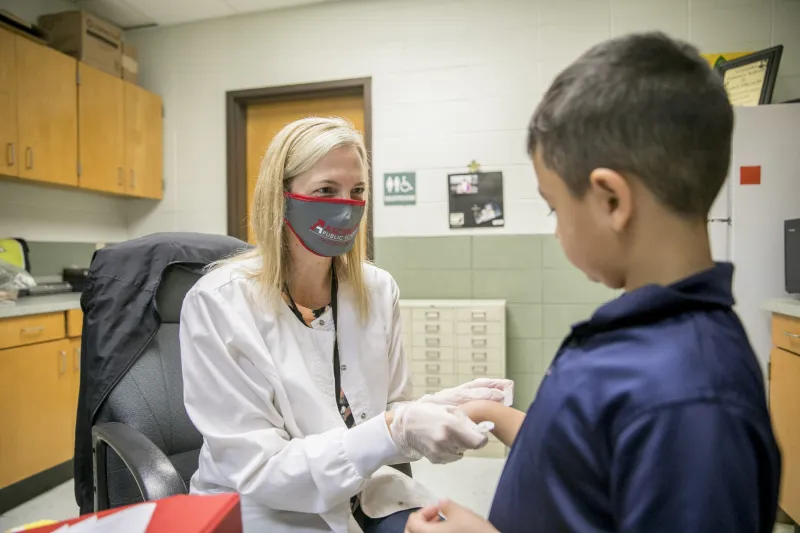
Across the United States, a growing number of school districts are reimagining the role of education in shaping long-term health outcomes—embedding mental health screenings, chronic disease detection, and health literacy into the fabric of daily school life. The results are quietly challenging the assumption that healthcare and education are separate systems, and raising a compelling question: what if the most powerful prevention infrastructure in America is already in every neighborhood?

The Cost of Waiting: Why Preventing Mental Health Crises Is Smarter Than Treating Them
Community Health Spotlights

The Cost of Waiting: Why Preventing Mental Health Crises Is Smarter Than Treating Them

The United States spends hundreds of billions of dollars each year responding to mental health emergencies, yet invests a fraction of that in the community-based programs proven to stop crises before they start. A growing coalition of public health advocates, economists, and community leaders is making the case that upstream investment in psychological well-being is not just compassionate — it is fiscally essential.

Screened and Saved: Understanding Why Free Cancer Tests Go Unclaimed
Public Health Investigation

Screened and Saved: Understanding Why Free Cancer Tests Go Unclaimed

Millions of Americans are eligible for no-cost cancer screenings yet decline to schedule them. Researchers and community health workers are uncovering the complex web of psychological fears, logistical obstacles, and systemic mistrust that stands between a free test and a potentially life-saving diagnosis.

Waiting for the Alarm: The Hidden Cost of America's Symptom-First Health Culture
Public Health Investigation

Waiting for the Alarm: The Hidden Cost of America's Symptom-First Health Culture

Millions of Americans forgo routine screenings each year, choosing instead to seek care only after symptoms appear — a pattern that costs lives and billions of dollars annually. Researchers and clinicians are now asking a difficult question: why does a nation with widespread access to preventive services still treat medicine as a last resort? The answers reveal a complex web of psychology, systemic design, and deeply ingrained cultural habits.

The Neighborhood as Medicine: How Human Connection Is Quietly Reshaping American Health
Community Health Spotlights

The Neighborhood as Medicine: How Human Connection Is Quietly Reshaping American Health

A growing body of research is drawing a direct line between social isolation and serious physical illness, challenging the assumption that health outcomes are determined primarily by clinical care and individual behavior. Across the country, neighborhoods are discovering that parks, community gardens, and intergenerational gathering spaces may be among the most powerful prevention tools available. Their stories offer a compelling blueprint for what community-driven public health can look like.

The Office as a Health Hub: How Corporate Wellness Is Redefining Who Gets to Be Well
Community Health Spotlights

The Office as a Health Hub: How Corporate Wellness Is Redefining Who Gets to Be Well

Employer-sponsored wellness programs have evolved far beyond gym discounts and step-count competitions. A new generation of corporate health initiatives is delivering measurable preventive care outcomes—and raising urgent questions about equity, access, and what it would take to extend these benefits to the millions of Americans who work outside traditional employment.

Free Care, Unused: Uncovering Why Millions of Americans Turn Away From Preventive Services
Public Health Investigation

Free Care, Unused: Uncovering Why Millions of Americans Turn Away From Preventive Services

Preventive health services—many of them fully covered under federal law—go untapped by tens of millions of Americans each year. This investigation examines the layered psychological, logistical, and structural forces driving that gap, and what communities can do to close it before the cost becomes catastrophic.

Rooted in Community: Five American Towns That Built Their Own Path to Wellness
Community Health Spotlights

Rooted in Community: Five American Towns That Built Their Own Path to Wellness

From Appalachian hollers to urban neighborhoods in the Southwest, a new generation of community-driven prevention programs is proving that lasting health change doesn't require a pharmaceutical budget—it requires trust, creativity, and neighbors willing to show up for one another. Here are five grassroots initiatives rewriting what prevention looks like in America.

America's Quiet Epidemic: The Alarming Decline in Preventive Health Screenings
Public Health Investigation

America's Quiet Epidemic: The Alarming Decline in Preventive Health Screenings

Millions of Americans are quietly forgoing the routine screenings that could detect life-threatening conditions before they become irreversible. A convergence of financial strain, systemic distrust, and fragmented healthcare access is driving this dangerous trend—and the consequences are already rippling through emergency rooms and chronic disease wards nationwide.