Algorithmically Reassured: How Digital Health Tools Are Quietly Undermining Preventive Care

The Screen Between Patient and Prevention
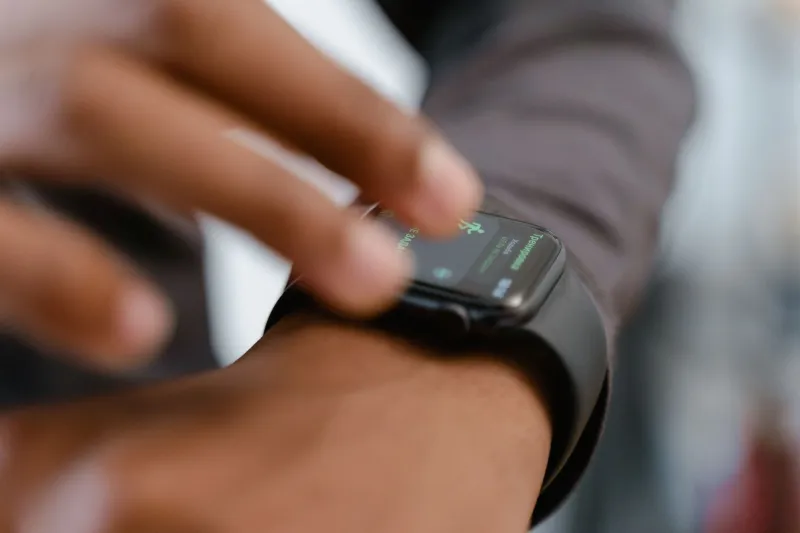
On any given morning, an estimated one in three American adults will open a health-related app before they open their front door. They will log their sleep quality, check their resting heart rate, photograph a suspicious skin blemish for AI analysis, or type a cluster of symptoms into a digital checker that returns a probability-weighted list of possible conditions. By the time they consider calling their physician's office — if they consider it at all — many have already arrived at a self-issued verdict.
This is not simply a story about technology. It is a story about trust, reassurance, and the subtle ways in which the architecture of digital health platforms has begun to reshape how Americans relate to preventive medicine. The consequences for public health are neither trivial nor fully understood, but the early signals are concerning enough to warrant serious examination.
The Appeal of the Algorithm
To understand why so many Americans have migrated their health decision-making toward digital tools, one must first acknowledge what those tools do exceptionally well. They are available at 3 a.m. They do not require an appointment, a copay, or the particular vulnerability of sitting in an examination room. They deliver answers in seconds and do so in language calibrated to feel both authoritative and reassuring.
Psychologists refer to a related phenomenon as "confirmatory comfort" — the tendency to seek out information that validates a preferred conclusion. When a symptom checker suggests that chest tightness is most likely attributable to anxiety or muscle strain rather than a cardiac event, the user who was already hoping for that answer is primed to accept it without further inquiry. The platform has not lied. It has simply offered probability in a format that human psychology is poorly equipped to interrogate.
This dynamic is compounded by what researchers have termed "automation bias" — the documented tendency to defer to machine-generated outputs even when contradictory evidence is available. In clinical contexts, this bias becomes particularly consequential. A person who receives algorithmic reassurance about a recurring symptom may delay a screening appointment by weeks or months, precisely the interval during which early-stage conditions are most amenable to intervention.
Prevention Delayed Is Prevention Denied
The case for early detection and preventive screening rests on a straightforward biological premise: most serious chronic conditions, including cardiovascular disease, type 2 diabetes, and several of the most prevalent cancers, are far more treatable — and far less costly — when identified before symptoms become acute. The entire architecture of evidence-based preventive care is designed to catch disease at the threshold, not at the crisis.
When patients substitute algorithmic self-assessment for clinical evaluation, they do not simply delay a single appointment. They interrupt a system of longitudinal care in which a physician's knowledge of a patient's history, risk factors, and prior screenings forms the foundation of sound preventive judgment. No symptom-checker app has access to a patient's family history of colon cancer, their lipid panel from two years prior, or the subtle change in their blood pressure trajectory that a trained clinician might recognize as a precursor worth monitoring.
Data from the Centers for Disease Control and Prevention indicate that rates of routine preventive visits among adults under fifty have declined measurably over the past decade — a period that corresponds almost precisely with the mass adoption of consumer health technology. Causality is difficult to establish cleanly, but the correlation has attracted sufficient concern among public health researchers to prompt ongoing investigation.
Who Is Most Affected
The impact of digital health self-reliance is not distributed evenly across the population. Younger adults, particularly those between the ages of 25 and 44, report the highest rates of using apps and online platforms as a primary health resource. This demographic is also, historically, the least likely to maintain a consistent relationship with a primary care provider — a pattern that digital tools may be reinforcing rather than correcting.
At the same time, certain communities that have historically faced structural barriers to healthcare access — including cost, geographic distance, and systemic distrust born of documented mistreatment — have found genuine utility in digital health platforms as a first point of contact. For these populations, dismissing technology outright would be both impractical and inequitable. The challenge is not to eliminate digital health tools but to reframe their appropriate role within a broader preventive care ecosystem.
Public health advocates have begun to argue for what some are calling a "bridge model" — an approach in which digital tools are explicitly designed to facilitate, rather than substitute for, clinical engagement. Under this framework, a symptom checker's output would not terminate with a probability assessment but would instead generate a clear recommendation for follow-up, complete with resources to connect with a community health center, telehealth provider, or primary care physician.
The Physician Relationship Under Pressure
There is a deeper tension embedded in this conversation that public health professionals are only beginning to name openly. The widespread adoption of consumer health technology has not occurred in a vacuum. It has accelerated alongside a broader erosion of institutional trust — in government, in media, and in medicine itself. When a patient arrives at a clinical encounter having already consulted three apps, two Reddit threads, and a popular wellness podcast, the physician is no longer the first voice in the room. They are, at best, one voice among many.
This shift places new demands on clinical communication. Providers who can engage thoughtfully with a patient's digital health narrative — acknowledging what the technology got right while clearly explaining its limitations — are better positioned to restore the patient's confidence in evidence-based preventive care. Those who dismiss the digital encounter entirely risk deepening the skepticism that drove the patient to their smartphone in the first place.
Medical education programs and health systems are beginning to grapple with this reality. Several academic medical centers have introduced training modules focused on "digital health literacy dialogue" — equipping physicians and nurse practitioners with the language to have productive conversations about the role of apps and online tools in a patient's health decision-making.
Reclaiming Prevention in a Digital Age
The Prevention Project's core mission has always rested on a straightforward conviction: that communities equipped with accurate information and meaningful access to care will make better health decisions. That conviction does not change in the presence of technology. What changes is the environment in which health decisions are made — and the new forms of misinformation, overconfidence, and delayed action that environment can produce.
Digital health tools, at their best, represent an extraordinary opportunity to extend the reach of preventive messaging, reduce barriers to initial engagement, and support patients in tracking their own health between clinical visits. At their worst, they offer the sensation of medical knowledge without its substance — a convincing simulation of informed self-care that costs nothing and, in some cases, costs everything.
The work ahead requires not a rejection of innovation but a more honest reckoning with its limits. Preventive care has always depended on the relationship between a patient and a provider who knows them over time. No algorithm, however sophisticated, has yet learned to replicate that.