The Heat We Can See Coming: How Cities Are Turning Extreme Heat Into a Preventable Condition
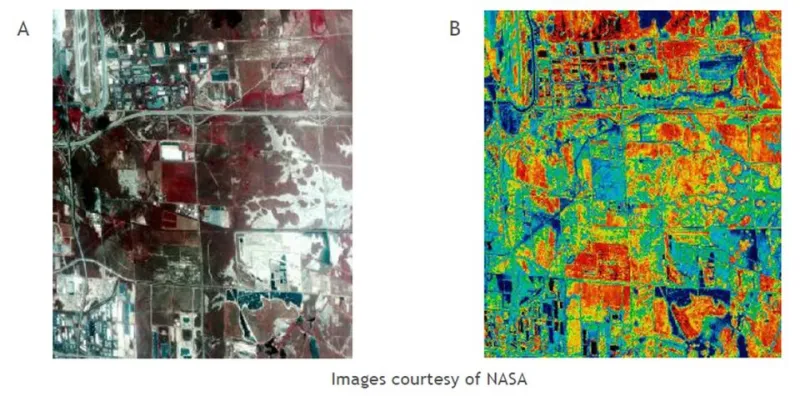
Photo: NASA, Public domain, via Wikimedia Commons
Extreme heat is no longer treated in many American cities as a simple inconvenience of summer. It is increasingly understood as a public health emergency with a predictable season, recognizable risk factors and a set of interventions that can save lives. In 2026, heat action plans have moved from the margins of municipal planning into the center of emergency preparedness. The best of them treat heat less like a weather event and more like a chronic condition: something to monitor, manage and prevent from becoming fatal.
From Weather Alert to Health Alert
A heat action plan is more than a forecast. It is a coordinated response that links meteorological warnings to public health outreach, cooling centers, utility protections, transportation assistance and real-time communication with residents. Cities that have built strong plans typically begin days before a heat wave arrives. They activate trusted messengers, check on older adults and people living alone, extend pool and library hours, and work with utilities to avoid shutoffs during dangerous temperatures.
The shift matters because heat deaths are often invisible until after the fact. Unlike a hurricane or a wildfire, a heat wave does not leave a clear physical path. Its victims are often found indoors, alone, without air conditioning. A prevention-first approach begins with the recognition that these deaths are not acts of nature. They are failures of planning, housing, social connection and public awareness.
Mapping Who Is Exposed
Cities are getting better at identifying where risk concentrates. Neighborhood vulnerability maps combine surface temperature, tree canopy, housing quality, poverty rates, age and chronic disease prevalence. The maps often reveal what residents already know: the hottest blocks are frequently the same blocks with the least shade, the oldest housing stock and the fewest resources to cope.
Phoenix has developed one of the most visible heat response systems in the country, with cooling centers, outreach teams and a focus on unsheltered residents. Miami-Dade County has emphasized heat health alerts and worker protections. Los Angeles has linked heat planning to tree planting and urban greening. Chicago, where a 1995 heat wave killed hundreds of residents, has continued to refine its warning and outreach systems. These are not identical models, but they share a common insight: heat risk is shaped by neighborhood conditions, not just temperature.
Cooling Centers Are Not Enough
Cooling centers are a core part of any heat response, but they are not a complete solution. A center that closes at 5 p.m. may not help a worker who needs relief in the evening. A site without transportation access is a sign rather than a service. People may avoid centers because they cannot bring pets, fear losing a spot, lack information, or distrust government buildings. Older adults may be reluctant to leave home. Unsheltered residents may face barriers to entry.
The most effective programs address those barriers directly. They partner with libraries, faith communities and neighborhood organizations. They provide water, cooling kits and wellness checks. They use community health workers who can reach residents in their preferred language. They treat cooling as a continuum of care rather than a single destination.
Workers and the Heat Standard Gap
Outdoor workers, agricultural laborers, construction crews, delivery drivers and warehouse employees face heat exposure that no cooling center can fix. Some states, including California, Oregon and Washington, have adopted heat-specific worker protections. Other jurisdictions have moved more slowly, and a federal heat standard remains incomplete. For public health advocates, worker protection is not a labor issue separate from prevention. It is a core part of heat policy.
A prevention-first strategy would include mandatory water and rest breaks, shade, acclimatization plans, training for supervisors and clear thresholds for stopping work. It would also extend protections to indoor workers in hot kitchens, laundries and warehouses. Heat illness is preventable, but only if the rules reach the people who are exposed on the job.
The Neighborhoods Still Left Exposed
Even cities with strong plans leave some residents behind. Low-income renters may lack air conditioning and cannot afford efficiency upgrades. Older adults may live alone and hesitate to ask for help. People with limited English proficiency may not receive alerts. Unsheltered residents may have nowhere to go. Utility shutoffs, eviction risk and unreliable transportation compound the danger.
Long-term prevention requires more than emergency response. It means investing in tree canopy, reflective surfaces, home cooling, weatherization and affordable housing. It means designing streets and public spaces for shade. It means treating heat as a housing and land-use issue as much as a health issue.
What a Prevention-First Heat Strategy Requires
A serious heat strategy needs stable funding, cross-agency coordination and community engagement before the first heat wave arrives. It needs metrics that go beyond temperature, including emergency department visits, heat-related illness and deaths. It needs to evaluate whether cooling centers are actually reachable and whether outreach is reaching the people most at risk.
The promise of the current moment is that cities no longer have to guess what works. Heat action plans, vulnerability mapping and cooling networks are proven tools. The remaining question is whether they will be funded at the scale of the problem and designed with the residents who face the greatest risk. Heat is predictable. Prevention should be, too.