The Pavement Prescription: Rebuilding Streets for Health, Not Just Traffic
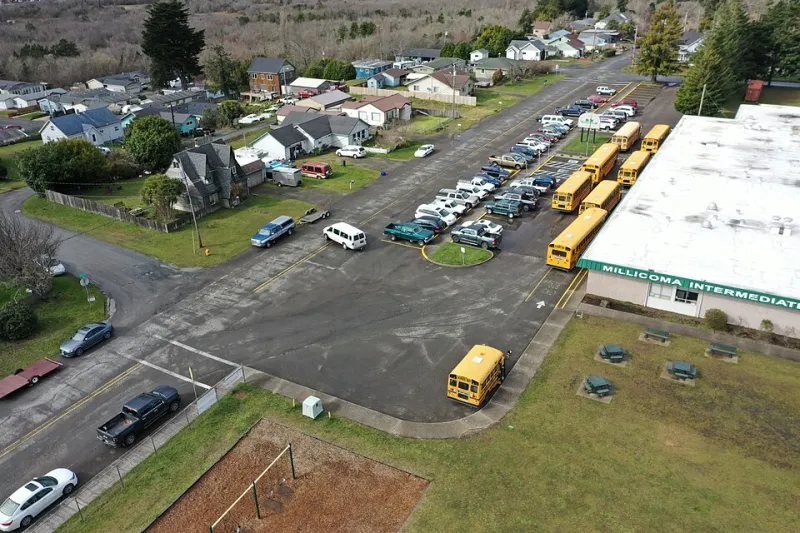
Photo: Oregon Department of Transportation, CC BY 2.0, via Wikimedia Commons
The health cost of a missing sidewalk
A missing sidewalk can look like a minor inconvenience to a transportation planner. To a parent pushing a stroller, an older adult using a walker, or a teenager walking to school, it can be a daily barrier. It can also be a health risk. When streets lack safe places to walk, people drive more, move less, and face greater exposure to traffic injury. The consequences accumulate quietly in rates of physical inactivity, chronic disease, and social isolation.
Preventive health is often discussed in terms of clinics, prescriptions, and screenings. The built environment is just as fundamental, but it is rarely funded or evaluated as health infrastructure. A sidewalk is not a medical device. A crosswalk is not a prescription. Yet both determine whether a routine walk is possible, pleasant, and safe. In many American communities, the pavement itself is a prevention gap.
Why car-dependent design is a health issue
Decades of transportation policy have prioritized vehicle speed and throughput. The result is a landscape where daily needs are spread far apart and where walking is often an afterthought. In some neighborhoods, sidewalks end abruptly at a curb cut. In others, there is no shade, no bench, and no safe crossing for half a mile. These conditions make physical activity harder to fit into ordinary life, especially for people who cannot afford a gym or who live in areas with high traffic volumes.
The health effects are not limited to inactivity. Traffic crashes are a leading cause of injury and death, and pedestrians are among the most vulnerable road users. Heat is another factor: streets without trees or shade become dangerous during summer heat waves. Social connection suffers as well. Walkable neighborhoods create casual encounters that strengthen community ties, while disconnected subdivisions can leave residents more isolated.
These are prevention problems with engineering solutions. That is why a growing number of US communities are reframing street design as a health intervention rather than a purely transportation matter.
When street design becomes a health program
Complete Streets policies, Safe Routes to School programs, and Vision Zero commitments have spread across the country. The best examples go beyond policy language. Indianapolis built the Cultural Trail, a greenway that connects neighborhoods, cultural districts, and downtown and has become a model for how dedicated walking and biking infrastructure can support local economies and daily activity. Seattle has used its transportation levy to fund sidewalks, safe routes, and pedestrian improvements in areas with long-standing gaps. Denver has focused attention on its sidewalk network, recognizing that missing links are a barrier to accessibility and public health.
These efforts are not identical, and not all have succeeded in every respect. But they share a shift in framing. Instead of asking only how many cars a road can move, they ask who can safely reach a school, a clinic, a grocery store, or a park. They treat connectivity as a health outcome. They measure not only crashes but also walking rates, access to destinations, shade, and resident experience.
That shift is not automatic. It requires advocates who can translate health data into transportation language and who can stay engaged through long capital planning cycles. It also requires residents at the table, because a sidewalk that looks sufficient on a map may be unusable for a person with a disability or a parent with a stroller.
A framework for local advocates
Local advocates can begin with a simple map. Where are the sidewalk gaps? Which schools, clinics, transit stops, and grocery stores are cut off from residential areas? Where are crossings unsafe? Where is there no shade? Pair that map with health data: emergency department visits for pedestrian injuries, rates of physical inactivity, asthma, and heat-related illness. The goal is not to produce a perfect study. It is to show that street design and health outcomes are connected in specific places.
Next, advocates can align with the budget calendar. Capital improvement plans, school district budgets, and transportation departments all follow cycles. A request made in the middle of a budget year may be ignored, while a request made during public comment can shape next year's priorities. Advocates can ask for small, concrete commitments: a sidewalk gap study, a safe routes plan, a shade tree program, a pilot crossing improvement.
They can also ask for health metrics. Transportation agencies often measure vehicle delay and crash counts. Advocates can ask them to add pedestrian counts, access to destinations, and heat exposure. Health departments can contribute data on chronic disease and injury. Schools can report on how students travel. These measures do not need to be complicated, but they should be public.
Finally, advocates can build unusual coalitions. Parents, older adults, disability groups, public health departments, faith communities, and local businesses all have reasons to support safer streets. A coalition that speaks to safety, access, and economic vitality is harder to dismiss than a single-issue campaign.
Measuring what matters
If streets are health infrastructure, they deserve health-style evaluation. That means tracking sidewalk miles added, crossings improved, trees planted, and pedestrian counts. It means monitoring injuries and crashes. It also means asking residents whether they feel safe walking, whether they can reach daily needs without a car, and whether their neighborhood is cooler in summer.
Health impact assessments can help local officials consider the health consequences of transportation decisions before construction begins. They are not a substitute for political will, but they can create a shared language between planners and public health staff. Over time, that language can change how projects are prioritized.
The prescription is concrete
Prevention is sometimes treated as an abstraction, a matter of personal choices and clinical reminders. The built environment is a reminder that prevention is also concrete. It is a sidewalk that connects a neighborhood to a school. It is a crossing that gives an older adult enough time to cross. It is a tree that makes a summer walk tolerable. These are not luxuries. They are the physical conditions that make healthy routines possible.
Communities that treat street design as a health intervention are not just building better roads. They are prescribing movement, safety, and connection in the most ordinary way available. The pavement can be medicine, but only if local advocates demand that it be designed and funded that way.