When Instinct Overrules Evidence: The Deep Roots of Medical Skepticism in America

Every year, primary care physicians across the United States deliver millions of evidence-based recommendations — get screened, take this vaccine, modify that diet — only to watch a significant portion of those recommendations dissolve somewhere between the exam room and the parking lot. The patient nods, accepts the printed instructions, and then turns to a podcast, a Facebook group, or a deeply held personal conviction for a second opinion that frequently wins.
This is not a story about ignorance. Many of the Americans who decline preventive care are educated, engaged, and genuinely interested in their own health. The gap between clinical guidance and personal behavior is far more complex than a simple deficit of information — and understanding it is one of the most pressing challenges facing public health today.
The Illusion of Personal Authority
American culture has long celebrated the self-reliant individual. From frontier mythology to contemporary wellness influencer culture, there is a persistent and deeply ingrained belief that one's own body knowledge is uniquely valid — perhaps more valid than the standardized protocols produced by institutions. This conviction is not entirely without merit. Patients do possess intimate, lived knowledge of their own bodies that clinical assessments sometimes fail to capture.
The problem emerges when that legitimate self-awareness expands into a wholesale rejection of population-level evidence. A person who once experienced a side effect from a medication may generalize that experience into a belief that pharmaceutical interventions are categorically untrustworthy. Someone whose grandmother lived to ninety without ever attending a wellness visit may conclude that preventive screenings are unnecessary for their family line. These narratives feel true because they are rooted in real experience — yet they are poor substitutes for clinical evidence when applied to complex, asymptomatic conditions like hypertension, colorectal cancer, or prediabetes.
Cognitive scientists refer to this tendency as the "availability heuristic" — the mental shortcut through which vivid personal or anecdotal experiences are weighted more heavily than statistical data. For public health communicators, this means that a single compelling story shared in a neighborhood Facebook group can undo years of carefully constructed messaging about the value of early detection.
A History That Earned Its Skepticism
Any honest accounting of medical distrust in America must acknowledge that some of it has been earned. The Tuskegee Syphilis Study, in which Black men were deliberately denied treatment for decades, left a wound on the relationship between African American communities and the medical establishment that has never fully healed. Forced sterilization programs targeting Indigenous women, immigrants, and people with disabilities were carried out under the banner of public health well into the twentieth century. More recently, the aggressive marketing of opioid medications by pharmaceutical companies — with the complicity of prescribing physicians — left millions of Americans dependent, injured, or bereaved.
These are not ancient grievances. For many communities, they are living memory, passed down through families and reinforced by ongoing disparities in care quality and clinical outcomes. When a public health official asks a community to trust institutional medicine, they are asking people to set aside a historical record that, in many cases, genuinely warrants caution.
This context matters enormously for prevention advocates. Dismissing medical skepticism as irrational or uninformed — without acknowledging the conditions that produced it — is not only intellectually dishonest; it is strategically counterproductive. Communities that feel patronized do not become more compliant. They become more resistant.
The Social Media Amplification Effect
The information environment in which Americans make health decisions has changed dramatically over the past two decades. Peer-reviewed research now competes for attention alongside wellness blogs, influencer testimonials, and algorithmically curated content designed not to inform but to engage. Engagement, as any platform engineer will confirm, is most reliably generated by content that provokes strong emotional responses — fear, outrage, or the warm validation of having one's existing beliefs confirmed.
This architecture systematically advantages misinformation. A claim that a common vaccine causes harm travels faster and farther than a nuanced explanation of how population immunity functions. A viral post suggesting that cholesterol guidelines were written by pharmaceutical lobbyists reaches more Americans in an afternoon than a decade's worth of cardiology research.
Public health institutions have been slow to adapt to this reality. Official communications often remain formal, data-dense, and emotionally flat — well-suited to peer-reviewed journals, poorly suited to competing with a charismatic influencer who speaks directly to camera and uses the language of personal empowerment. The result is an information asymmetry that consistently favors doubt over prevention.
The Trauma Variable
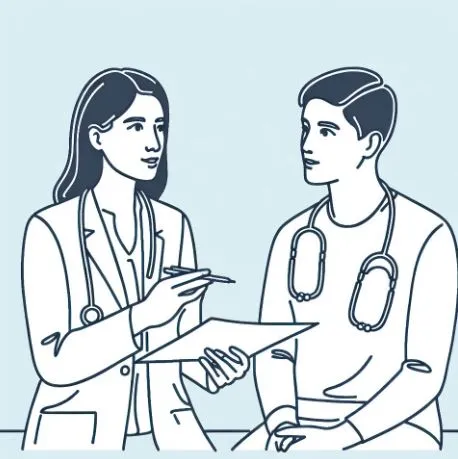
Beyond cultural narratives and media dynamics, there is a more intimate factor that public health researchers have increasingly documented: the role of individual medical trauma in shaping prevention behavior. Patients who have experienced dismissive or harmful clinical encounters — whose pain was minimized, whose symptoms were misattributed, who were made to feel like burdens rather than partners in their own care — frequently delay or avoid future preventive engagement.
This is particularly pronounced among women, who report at higher rates than men that their physical complaints have been attributed to anxiety or dismissed as psychosomatic. It is also well-documented among patients with larger bodies, who describe receiving weight-focused responses to symptoms that, in thinner patients, would have prompted immediate diagnostic workup. When the healthcare system repeatedly signals that certain patients are less deserving of careful attention, those patients rationally recalibrate their expectations of what clinical engagement can offer them.
Preventive care cannot be effectively promoted in isolation from the quality of care experiences that precede it. Trust is not built through awareness campaigns alone. It is built — or destroyed — in individual clinical encounters.
Bridging the Gap Without Closing Off the Conversation
For prevention advocates and public health communicators, the path forward requires a fundamental reorientation. The goal cannot simply be to correct misinformation or to reassert the authority of clinical evidence, though both of those efforts have their place. The deeper work involves rebuilding the relational conditions under which trust becomes possible.
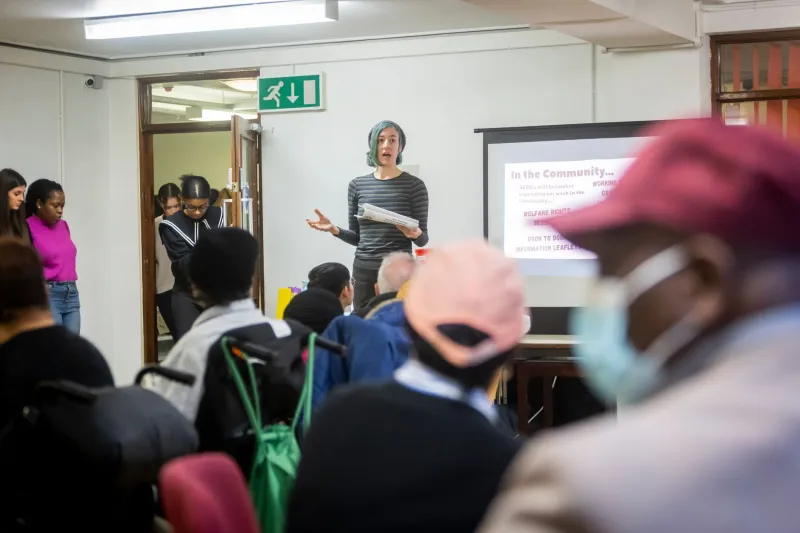
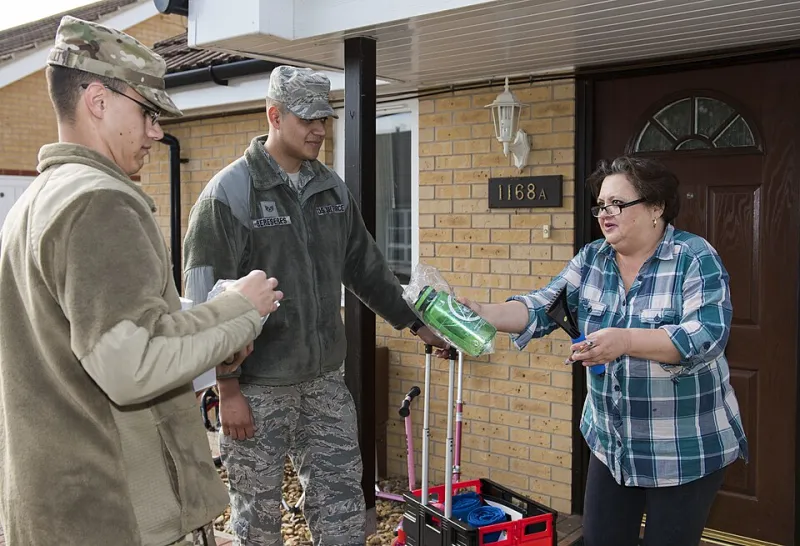
Several evidence-informed approaches have demonstrated promise. Community health worker programs, which place trusted local figures in the role of health navigators, have shown meaningful success in reaching populations that remain skeptical of institutional medicine. Motivational interviewing techniques, which prioritize the patient's own values and goals over clinician-directed outcomes, have been associated with improved preventive care uptake across a range of conditions. Narrative medicine — the use of storytelling to communicate health information in emotionally resonant ways — has shown particular effectiveness in countering misinformation by engaging the same psychological mechanisms that misinformation exploits.
Perhaps most importantly, public health institutions must become more willing to acknowledge the legitimate sources of medical skepticism rather than treating every expression of doubt as a problem to be corrected. When communities feel genuinely heard — when their historical grievances are acknowledged, their personal experiences validated, and their concerns addressed with substance rather than dismissal — the conditions for trust begin to form.
The Prevention Imperative
The stakes of this trust deficit are not abstract. Preventable diseases that go undetected because patients distrust screening recommendations carry real costs in suffering, disability, and premature death. Every case of colorectal cancer caught at stage four rather than stage one because a patient declined a colonoscopy represents a failure not just of individual decision-making but of the systems that failed to earn that patient's confidence.
Addressing medical skepticism is, at its core, a prevention issue — one that demands the same rigor, creativity, and community-centered thinking that The Prevention Project brings to every dimension of public health. The evidence is not the obstacle. The relationship is. And relationships, unlike algorithms, can be repaired.