Waiting for the Alarm: The Hidden Cost of America's Symptom-First Health Culture
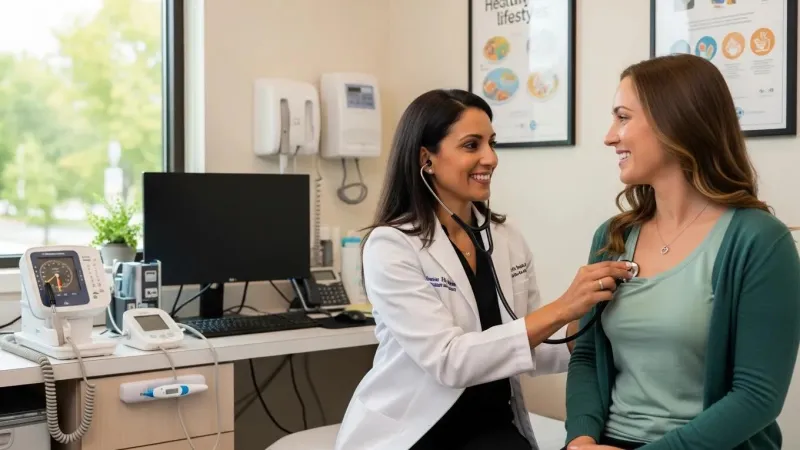
Photo: doctor patient consultation preventive health screening clinic, via lifebeyondmd.com
In 2023, the American Diabetes Association estimated that more than 8 million Americans were living with undiagnosed type 2 diabetes. Not because screening tools are unavailable. Not because the condition is difficult to detect. But because a significant portion of the population simply had not been tested. Many of them would not seek care until the disease had already begun its quiet, irreversible work on their kidneys, eyes, and cardiovascular system.
This is not an anomaly. It is a pattern — one that public health professionals have been tracking for decades and that continues to resist straightforward solutions.
The Psychology of Postponement
To understand why people delay preventive care, it helps to understand how the human mind processes risk. Behavioral health researchers have long documented what is known as "optimism bias" — the tendency for individuals to believe that adverse health outcomes are more likely to happen to others than to themselves. When a person feels healthy, the logic of scheduling a colonoscopy or a fasting glucose test can feel abstract, even unnecessary.
Dr. Peter Ubel, a physician and behavioral scientist at Duke University, has described this phenomenon as a collision between present-focused thinking and future-oriented health planning. "We are wired to respond to immediate threats," he has noted in public health forums. "Prevention asks us to act urgently on behalf of a future self we can barely imagine."
This cognitive gap is compounded by what researchers call "illness salience" — the idea that people are far more motivated to address a health concern when they can feel it, name it, or see it. A persistent cough commands attention in a way that an elevated A1C reading simply does not.
When the System Reinforces the Delay
Psychology alone does not explain the full picture. The architecture of the American health care system has, in many respects, been built around acute care rather than prevention. Reimbursement structures have historically rewarded intervention over early detection. Primary care physicians — the gatekeepers of preventive medicine — are stretched thin, with average appointment times that leave little room for the kind of extended wellness conversations that motivate behavioral change.
Access remains a formidable barrier as well, even in communities where insurance coverage technically exists. Transportation, scheduling inflexibility, and the fear of unexpected medical bills all contribute to avoidance. A 2022 survey by the Kaiser Family Foundation found that nearly one in four Americans reported delaying or skipping recommended care due to cost concerns — even when that care was covered under their plan.
The confusion surrounding insurance benefits is itself a deterrent. Many insured Americans do not fully understand which preventive screenings are covered at no cost under the Affordable Care Act, a knowledge gap that functions as an invisible wall between eligible patients and the services designed to protect them.
The Arithmetic of Avoidance
The financial case for prevention is not subtle. The Centers for Disease Control and Prevention estimates that 90 percent of the nation's $4.1 trillion in annual health care expenditures are directed toward chronic and mental health conditions — the very categories most amenable to early intervention.
Consider heart disease, the leading cause of death in the United States. A routine lipid panel, which can be performed for a fraction of the cost of an emergency room visit, can detect elevated cholesterol years before a cardiac event occurs. Yet the American Heart Association reports that nearly half of all American adults have some form of cardiovascular disease, and many are unaware of it until a crisis forces their hand.
The calculus becomes even starker when one examines cancer outcomes. Colorectal cancer, when detected at its earliest stage, carries a five-year survival rate exceeding 90 percent. Detected at stage four, that figure drops below 15 percent. Screening colonoscopies are recommended for average-risk adults beginning at age 45, yet the CDC reports that screening rates remain well below national targets.
Shifting the Cultural Equation
Addressing this challenge requires more than expanding insurance coverage or increasing the number of screening sites, though both matter enormously. It requires a fundamental reframing of how Americans understand their relationship with medicine.
Some health systems have begun experimenting with proactive outreach models — sending reminders, offering home-based screening kits, and embedding preventive care conversations into non-clinical settings such as pharmacies and community centers. These approaches attempt to reduce the friction between intention and action.
Community health workers have emerged as particularly effective intermediaries in this effort. Trusted members of the communities they serve, these professionals can address not only logistical barriers but also the cultural skepticism and medical distrust that lead many patients — particularly those from historically marginalized populations — to avoid the health care system altogether.
Public health advocates argue that language matters as well. Framing preventive screenings as acts of self-determination rather than medical obligations has shown promise in several pilot programs. When individuals perceive screenings as tools they are choosing to use rather than procedures being imposed upon them, engagement improves.
A Preventable Crisis
The data are unambiguous: the United States spends more on health care than any other high-income nation, yet ranks near the bottom of peer countries on measures of preventable mortality. The gap between what is medically possible and what is actually practiced represents one of the most consequential public health failures of our time.
Closing that gap will require sustained investment in primary care infrastructure, targeted public education campaigns, and policy reforms that make preventive services genuinely easy to access. But it will also require a cultural shift — a willingness to treat the absence of symptoms not as evidence of good health, but as an opportunity to ensure it.
The alarm, once it sounds, has already come too late. Prevention asks us to act before we hear it. That is a harder ask than it sounds — and meeting it is among the most important things this country can do for its collective health.