Free Care, Unused: Uncovering Why Millions of Americans Turn Away From Preventive Services
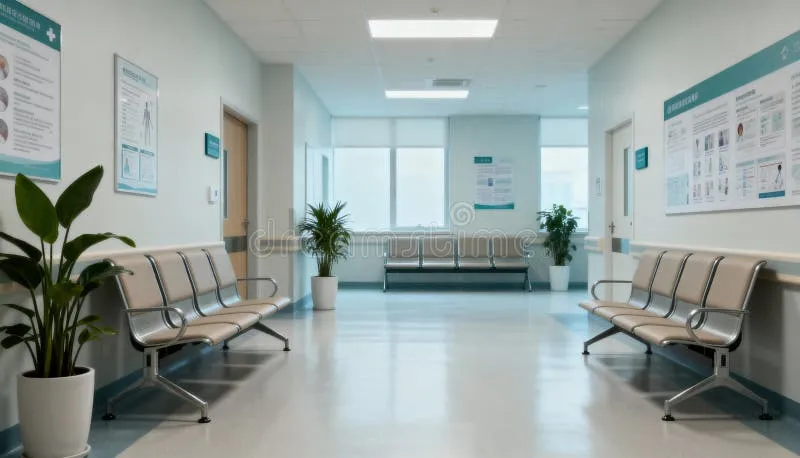
Photo: empty medical waiting room with patient information brochures, via thumbs.dreamstime.com
In 2010, the Affordable Care Act mandated that most private health insurers cover a broad range of preventive services at zero cost to the patient—no copay, no deductible, no billing surprise. Colonoscopies, mammograms, blood pressure screenings, diabetes risk assessments, and childhood immunizations all fell under this umbrella. The legislative intent was clear: remove the financial barrier, and Americans would engage with the care that keeps them well.
More than a decade later, the evidence tells a more complicated story.
According to data from the Kaiser Family Foundation, fewer than one in three eligible adults receive the preventive screenings recommended for their age and risk profile. Millions of Americans with full insurance coverage—and millions more served by community health centers and federally subsidized programs—are not walking through the door. The services are available. The cost is often negligible. Yet the gap between access and utilization remains stubbornly wide.
Understanding why requires moving beyond the assumption that cost is the only barrier worth addressing.
The Psychology of Inaction
Behavioral economists have long studied a phenomenon they call "present bias"—the human tendency to overvalue immediate comfort and undervalue future consequences. In the context of preventive health, this manifests as a consistent deferral of screenings and check-ups that carry no immediate reward. A colonoscopy does not make a person feel better today. A blood pressure reading that comes back normal offers no visceral satisfaction. The benefit—catching a problem before it becomes a crisis—is abstract, distant, and easy to dismiss.
Dr. Richard Thaler's Nobel Prize-winning work on nudge theory offers one lens for understanding this dynamic. When the default option is inaction, most people remain inactive. When enrollment in preventive care programs requires deliberate effort—scheduling an appointment, navigating an insurance portal, taking time off work—the friction is enough to keep millions away. Behavioral interventions that flip the default, such as automatic scheduling reminders or opt-out rather than opt-in enrollment in wellness programs, have shown measurable success in pilot programs across several states.
Fear also plays a significant role. Surveys conducted by the American Cancer Society consistently show that a meaningful percentage of Americans avoid cancer screenings not because they believe they are healthy, but because they are afraid of what a screening might reveal. This fear of diagnosis—sometimes called "ostrich bias" in public health literature—is particularly pronounced among communities that have historically experienced poor outcomes within the medical system and have limited trust in healthcare institutions.
The Literacy Gap Nobody Talks About
Health literacy—the ability to obtain, process, and act on health information—is a public health crisis hiding in plain sight. The National Assessment of Adult Literacy estimates that nearly 90 million Americans read at or below an eighth-grade level, and health-related materials are frequently written at a college reading level. Insurance Explanation of Benefits documents, preventive care coverage summaries, and even appointment reminder letters often assume a level of comprehension that a significant portion of the population does not possess.
This gap has direct consequences. Patients who do not understand what a preventive service is, why it is recommended, or how to access it at no cost are unlikely to seek it out. Community health workers in Chicago, Houston, and rural Appalachia have reported that patients frequently believe preventive visits will result in unexpected bills—even when they are legally protected from such charges. The perception of cost, even when inaccurate, functions as a barrier equivalent to actual cost.
Language access compounds the problem. In communities with large non-English-speaking populations, the absence of culturally and linguistically competent outreach materials means that entire demographics effectively exist outside the reach of prevention messaging.
Structural Barriers That Policy Alone Cannot Fix
Even among Americans who understand their coverage and feel motivated to seek care, logistical obstacles frequently intervene. A single mother working two jobs may know that her annual well-woman exam is covered at no cost, but the ability to schedule that appointment during a weekday, arrange childcare, and travel to a provider who accepts her insurance plan may represent an insurmountable set of demands on her time and resources.
The shortage of primary care providers in rural and underserved urban areas further narrows access. In many counties across the American South and Midwest, residents must travel more than 30 miles to reach a primary care physician. For individuals without reliable transportation, that distance is functionally infinite.
Federally Qualified Health Centers (FQHCs) were designed in part to address this geographic and economic gap, offering sliding-scale fees and services to underserved populations regardless of insurance status. Yet awareness of these centers remains low, and many operate at or near capacity, resulting in appointment wait times that discourage follow-through.
Community-Level Strategies That Are Making a Difference
Despite the scope of these challenges, there are evidence-based interventions demonstrating genuine progress in communities across the country.
Trusted messenger programs have proven particularly effective. When preventive health outreach is delivered by community members—barbershop health advocates in Baltimore, promotoras in Southern California, faith-based health educators in rural Georgia—uptake rates for screenings and vaccinations improve substantially. Trust, it turns out, is a more powerful motivator than information alone.
Mobile health units are extending the reach of preventive services into neighborhoods where provider access is limited. Several health systems in Texas and the Pacific Northwest have deployed vans equipped for blood pressure monitoring, diabetes screening, and cancer detection, bringing services directly to community events, grocery store parking lots, and public housing complexes.
Simplified scheduling and reminder systems, including text-based appointment prompts and community health worker follow-up calls, have demonstrated in randomized trials that reducing the effort required to access care meaningfully increases the rate at which people follow through.
Employer and school-based integration of preventive screenings reduces the logistical burden by embedding health services into environments where people already spend their time—a model that merits significant expansion.
Shifting the Cultural Narrative
Underlying all of these strategies is a more fundamental challenge: the dominant American cultural narrative around healthcare remains reactive rather than proactive. Seeking care when one is ill is normalized; seeking care to remain well is often perceived as unnecessary, excessive, or even anxiety-inducing.
Changing that narrative requires sustained, community-grounded communication efforts that reframe prevention not as a medical obligation but as an act of self-determination and communal responsibility. It requires meeting people where they are—culturally, geographically, and linguistically—and building the kind of institutional trust that decades of inequitable care have eroded.
The services exist. The evidence for their value is overwhelming. The work ahead lies not in creating new programs, but in dismantling the invisible walls that keep millions of Americans from walking through the doors that are already open.