The Neighborhood as Medicine: How Human Connection Is Quietly Reshaping American Health
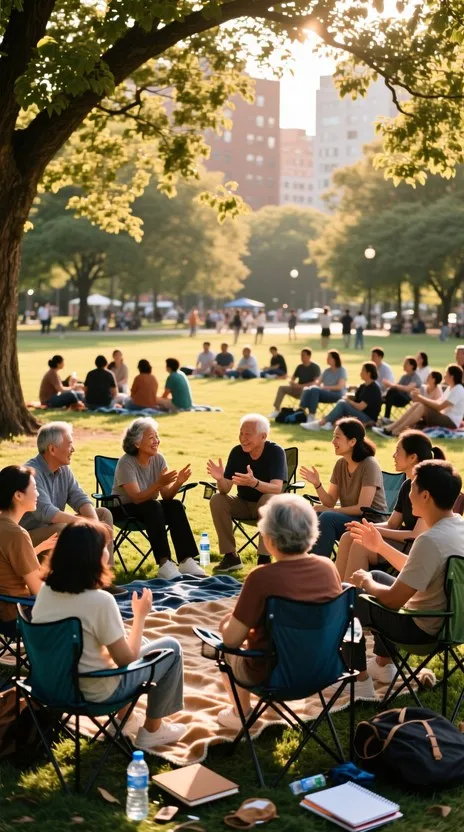
Photo: diverse community members gathering outdoor park neighborhood wellness, via images.stockcake.com
In the fall of 2019, a group of retired teachers, postal workers, and grandparents in Cleveland, Ohio, began meeting on Tuesday mornings in a park near their neighborhood library. They had no fitness instructor, no wearable technology, and no formal program structure. What they had was a walking route, a shared commitment to showing up, and, over time, one another.
Three years later, a local public health researcher who had been tracking the group's members documented something unexpected. Beyond modest improvements in blood pressure and mobility, participants reported significantly lower levels of loneliness, improved sleep quality, and — in several cases — reduced reliance on anxiety medication. The park had not changed. The people in it had.
Loneliness as a Clinical Concern
For much of the twentieth century, loneliness was treated as an emotional inconvenience rather than a medical condition. That understanding has changed substantially. In 2023, U.S. Surgeon General Dr. Vivek Murthy issued a formal advisory declaring loneliness and social isolation a public health crisis, citing research linking chronic isolation to a 29 percent increased risk of heart disease, a 32 percent increased risk of stroke, and a 50 percent elevated risk of developing dementia.
These figures are not peripheral to the work of disease prevention — they are central to it. Social connection, it turns out, functions through many of the same biological pathways as diet, exercise, and sleep. Chronic loneliness activates the body's stress response, elevates inflammatory markers, disrupts immune function, and accelerates cellular aging. The absence of meaningful human contact is, in a measurable physiological sense, hard on the body.
Yet the infrastructure investments that dominate public health conversations — new hospitals, expanded insurance networks, pharmaceutical innovations — rarely address the social dimensions of health. The result is a prevention gap that no clinical intervention alone can fill.
What the Research Is Revealing
The science linking social environment to health outcomes has matured considerably over the past decade. Researchers at Brigham Young University, analyzing data from more than 300,000 individuals, found that social isolation carries a mortality risk comparable to smoking 15 cigarettes per day. A separate longitudinal study published in the journal PLOS Medicine identified social relationship quality as a stronger predictor of early death than physical inactivity or obesity.
What makes these findings particularly significant for public health practitioners is their implication for resource allocation. Addressing social isolation does not require expensive medical infrastructure. It requires spaces, programming, and — most critically — intentional community design.
Gardens, Clubs, and Gathering Places
Across the United States, communities are arriving at this conclusion independently, often driven by neighborhood organizations and local nonprofits rather than top-down health initiatives.
In Detroit, Michigan, the Michigan Urban Farming Initiative has transformed vacant lots into communal growing spaces that serve as both food sources and social anchors. Residents who participate in seasonal planting and harvest events report a sense of purpose and belonging that, according to program coordinators, keeps them returning long after the novelty of gardening has worn off. A community health assessment conducted in partnership with a local university found measurably lower rates of depressive symptoms among consistent participants compared to neighborhood residents who did not engage with the program.
In rural Appalachia, where geographic isolation compounds the social disconnection that affects many aging populations, a network of intergenerational reading programs has taken root in county libraries and church halls. Older adults mentor school-age children through literacy activities — an arrangement that generates measurable cognitive benefits for seniors while simultaneously providing children with stable adult relationships outside the family unit. Participants on both ends of the age spectrum report improvements in mood, motivation, and perceived sense of community belonging.
In Minneapolis, Minnesota, a network of "social prescribing" navigators — modeled on a program that originated in the United Kingdom — now operates within several primary care clinics. When physicians identify patients experiencing social isolation, navigators connect them to community resources: volunteer opportunities, neighborhood clubs, cultural organizations, and local events. Early evaluation data suggest reductions in emergency department utilization among enrolled patients, a finding that has drawn the attention of health system administrators looking for cost-effective interventions.
Rethinking What Prevention Infrastructure Looks Like
These examples share a common thread: they leverage existing community assets rather than creating new ones. The park, the vacant lot, the library meeting room — these spaces already exist in virtually every American neighborhood. What they require is activation: programming that draws people in, structures that encourage return visits, and leadership that understands social connection as a health outcome in its own right.
Public health advocates argue that this reframing has significant implications for how municipalities allocate resources. Investing in park maintenance, community center programming, and public gathering spaces is not merely a quality-of-life decision — it is a prevention strategy with measurable downstream effects on health care utilization and chronic disease burden.
Architects and urban planners are increasingly being brought into these conversations. The concept of "healthy community design" — which prioritizes walkability, accessible green space, and mixed-use development that encourages casual social interaction — has gained traction in cities seeking to address health disparities without building new clinical facilities.
The Limits of the Individual Health Model
The dominant framework for health promotion in the United States has long centered on individual behavior: eat well, exercise regularly, attend your screenings, manage your stress. This framework is not wrong, but it is incomplete. It treats health as a private project rather than a collective one, and it places the full burden of wellness on individuals who are, in many cases, navigating environments that work against them.
The emerging evidence on social connection invites a broader model — one that recognizes neighborhoods, relationships, and community institutions as active participants in public health. A person embedded in a supportive social network is more likely to keep a medical appointment, more likely to adhere to a treatment plan, and more likely to report symptoms early rather than waiting for a crisis.
In this sense, the walking club in Cleveland, the community garden in Detroit, and the intergenerational reading program in rural Appalachia are not peripheral to the work of prevention. They are, in the most literal sense, doing the work — one Tuesday morning, one harvest season, one story read aloud at a time.
The neighborhood, it turns out, has always been a health intervention. We are only now beginning to measure it.