Screened and Saved: Understanding Why Free Cancer Tests Go Unclaimed
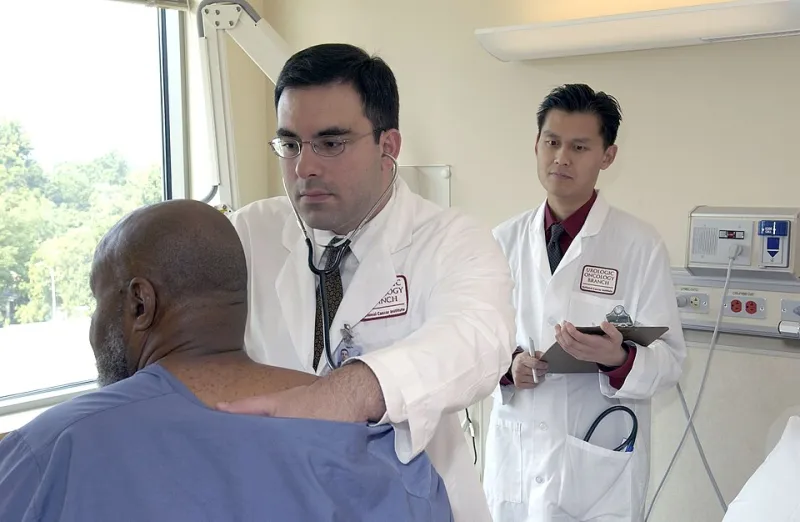
Photo: Unknown photographer, Public domain, via Wikimedia Commons
A mammogram costs nothing. A colonoscopy prep kit can be mailed directly to a patient's home. Cervical cancer screenings are available at community clinics across every state in the country. And yet, year after year, tens of millions of Americans who qualify for these no-cost, evidence-based tests never schedule them.
The gap between availability and utilization is one of the most confounding puzzles in American public health. Eliminating the financial barrier was supposed to be the breakthrough. The Affordable Care Act mandated that most private insurers cover preventive screenings at no out-of-pocket cost. Medicare and Medicaid followed with expanded coverage. Federally Qualified Health Centers absorbed the remaining gaps. The infrastructure, at least on paper, was in place.
So why aren't people showing up?
The Psychology of Anticipatory Dread
Researchers who study health decision-making have a term for the emotional state that precedes many skipped appointments: anticipatory dread. It is not simply fear of a bad result — though that fear is real and well-documented — but rather a layered anxiety that encompasses the experience of the test itself, the waiting period afterward, and the imagined cascade of consequences that might follow a positive finding.
Dr. Theresa Marteau, a behavioral scientist whose work has informed public health policy on both sides of the Atlantic, has described this phenomenon as "the paradox of prevention awareness." The more clearly a person understands what a screening might reveal, the more psychologically threatening the act of scheduling one can feel. Awareness, in other words, does not always translate into action.
This dynamic shows up in survey data with remarkable consistency. A 2022 study published in the journal Cancer Epidemiology, Biomarkers & Prevention found that among adults who had skipped a recommended colorectal cancer screening, nearly 40 percent cited worry about what the results might show — not cost, not access — as their primary reason for avoidance. For breast cancer screenings, similar patterns emerged, particularly among women under 50 who had received conflicting guidance from different medical authorities about when to begin routine mammography.
Confusion as a Barrier
That confusion is not incidental. It is, in part, a product of genuine scientific disagreement that has been poorly communicated to the public. The United States Preventive Services Task Force, the American Cancer Society, and various specialty medical organizations have issued recommendations that differ — sometimes significantly — on screening start ages, frequency, and methodology for breast, cervical, prostate, and colorectal cancers.
For a patient navigating this landscape without a consistent primary care relationship, the result is often paralysis. If experts cannot agree on when to start screening or how often to repeat it, the reasoning goes, perhaps waiting is the safer choice.
Community health educators working in underserved areas of cities like Detroit, Houston, and rural Appalachian counties report that this confusion is among the most common concerns they encounter. "People come in having read three different things online and they don't know who to believe," said one patient navigator working with a federally funded cancer prevention program in eastern Kentucky. "They're not ignoring the advice. They've gotten too much advice, and none of it matches."
Medical Mistrust and Its Deep Roots
For communities of color — particularly Black Americans — the barriers extend well beyond confusion or anxiety. They are rooted in a documented history of medical exploitation and neglect that continues to shape health-seeking behavior across generations.
Research consistently shows that Black Americans are less likely to complete recommended cancer screenings than their white counterparts, even when controlling for income and insurance status. The legacy of the Tuskegee Syphilis Study, the unauthorized use of Henrietta Lacks' cancer cells, and ongoing reports of differential treatment within clinical settings have created a rational skepticism that public health campaigns built on statistics alone are unlikely to overcome.
Programs that have succeeded in closing these gaps share a common thread: they are designed with community trust at their center, not as an afterthought. The Patient Navigator Outreach and Chronic Disease Prevention Act, first passed by Congress in 2005 and reauthorized multiple times since, funded programs that embedded trained navigators — often community members themselves — within health systems serving high-need populations. Evaluations of these programs have shown meaningful increases in screening completion rates, particularly for colorectal and breast cancer, in communities that had previously been among the hardest to reach.
What Works: Lessons From the Field
Beyond navigation programs, a growing body of evidence points to several strategies that have demonstrably improved screening participation.
Mailed stool-based tests have transformed colorectal cancer screening outreach. Rather than requiring a patient to schedule a colonoscopy — an invasive procedure that demands preparation, sedation, and a companion to drive them home — health systems can mail a fecal immunochemical test (FIT) kit directly to eligible patients. Studies from Kaiser Permanente and the Veterans Health Administration have documented completion rate increases of 20 to 40 percent when mailed tests replaced appointment-based outreach as the default approach.
Shared decision-making conversations, in which clinicians explicitly walk patients through the risks and benefits of a screening test rather than simply ordering it, have been shown to reduce decisional conflict and increase follow-through. This is particularly relevant for prostate cancer screening, where the potential for overdiagnosis and overtreatment has made patient-centered dialogue an ethical imperative.
Culturally tailored outreach materials, developed in partnership with the communities they are meant to serve, consistently outperform generic public health messaging. A breast cancer awareness campaign developed with input from Latina women in Los Angeles, for example, will likely land differently — and more effectively — than one adapted from materials designed for a different demographic context.
The Broader Stakes
Cancer detected at an early stage is dramatically more treatable than cancer caught late. Five-year survival rates for localized breast cancer exceed 99 percent; for distant-stage breast cancer, that figure falls to 28 percent. The arithmetic of early detection is unambiguous.
Yet the United States continues to underinvest in the outreach infrastructure that would make early detection a reality for all Americans, not merely those with consistent access to attentive primary care. Funding for community health worker programs remains fragmented and subject to annual appropriations battles. Patient navigation services, despite strong evidence of their effectiveness, are not universally reimbursed by insurers.
The prevention paradox — in which the tools to save lives exist but remain unused — is not a mystery without a solution. It is a policy and investment problem that communities, health systems, and legislators have the capacity to address. The question is whether the political will exists to treat prevention as seriously as treatment.
For the millions of Americans who will receive a cancer diagnosis this year, many of whom might have been identified earlier through a test they were eligible to receive at no cost, that question carries profound urgency.