Knowing Is Not Enough: The Science Behind Why Health Awareness Rarely Becomes Action
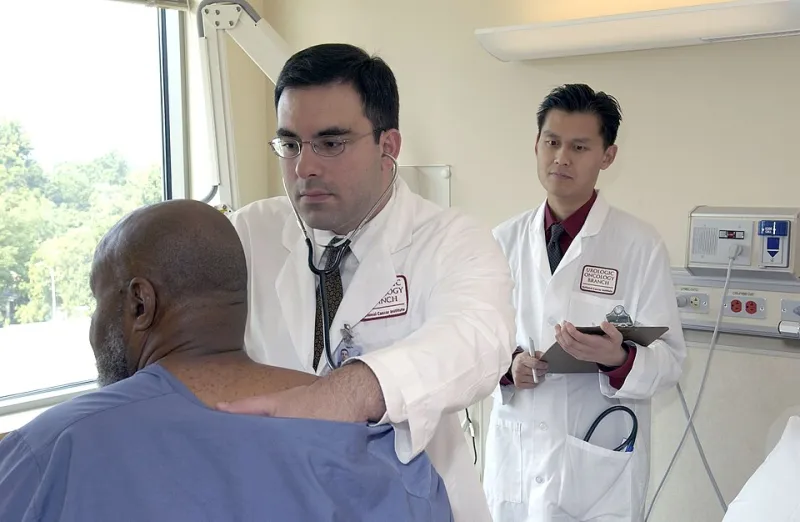
Photo: Nvss132, CC0, via Wikimedia Commons
Ask most Americans whether they should eat more vegetables, exercise regularly, wear sunscreen, or schedule their annual physical, and the answer is almost universally yes. Ask whether they actually do these things consistently, and the picture changes dramatically. This disconnect — the gap between health knowledge and health behavior — has frustrated public health professionals for generations. It also sits at the heart of why so many well-funded awareness campaigns produce measurable shifts in what people know while producing almost no measurable shifts in what people do.
The question is no longer whether Americans are informed. By most measures, they are. The question is why that information so rarely translates into sustained preventive action — and what the evidence suggests can actually close the gap.
The Illusion of Rational Decision-Making
For decades, public health messaging operated on a foundational assumption: that people, once informed of a risk, would rationally calculate the benefit of prevention and act accordingly. This model, rooted in the Health Belief Model developed in the 1950s, treated human beings as logical agents who weigh costs against benefits and respond predictably to new information.
Behavioral science has largely dismantled that assumption.
Research in behavioral economics and psychology consistently demonstrates that human decision-making is governed far more by emotion, habit, social context, and cognitive shortcuts than by deliberate reasoning. Nobel laureate Daniel Kahneman's framework of "fast" and "slow" thinking captures the essence of the problem: most daily decisions, including health-related ones, are made quickly, automatically, and with minimal conscious deliberation. Telling someone that smoking causes cancer is processed by the slow, rational mind. The decision to light a cigarette is made by the fast, automatic one.
This is not a failure of intelligence. It is a feature of human cognition — and designing prevention programs without accounting for it is, in the words of many behavioral researchers, akin to building a bridge without accounting for gravity.
Optimism Bias and the Illusion of Personal Immunity
One of the most well-documented obstacles to preventive action is optimism bias: the near-universal tendency for individuals to believe they are less likely than the average person to experience negative health outcomes. Studies consistently show that even when people acknowledge that a condition like Type 2 diabetes or colorectal cancer is common, they simultaneously believe their own personal risk is below average.
This cognitive distortion is not confined to any particular demographic. It appears across age groups, education levels, and income brackets. It may help explain why Americans who can accurately recite the risk factors for heart disease — the nation's leading killer — still fail to schedule cholesterol screenings or adopt heart-healthy diets at recommended rates.
Public health campaigns that rely on aggregate statistics ("one in three Americans will develop this condition") may inadvertently reinforce optimism bias. When risk feels like a population-level abstraction, it rarely feels personally urgent.
The Role of Temporal Distance
Prevention is, by definition, an investment in a future that has not yet arrived. This creates a fundamental tension with how human beings are wired to experience time. Behavioral scientists refer to this as "temporal discounting" — the well-established tendency to assign greater value to immediate rewards than to future ones, even when the future benefit is objectively larger.
A colonoscopy scheduled for next month competes with the immediate discomfort of the preparation process, the inconvenience of taking time off work, and the anxiety of potential findings. The future benefit — the detection and removal of a precancerous polyp that might otherwise become colon cancer in a decade — is real but distant, abstract, and emotionally remote. In that internal negotiation, the immediate costs frequently win.
This dynamic is not unique to health. It shapes financial planning, environmental behavior, and educational investment as well. But in the context of prevention, where the payoff is measured in avoided illness rather than tangible gain, temporal discounting is particularly consequential.
What Actually Works: Lessons From Effective Interventions
The emerging science of behavior change offers more than a diagnosis of the problem. It also points toward interventions that have demonstrated genuine success in moving people from awareness to action.
Reducing friction at the point of decision. One of the most consistent findings in behavioral public health is that simplifying the path to preventive action yields significant results, often more than intensifying messaging. When a health system in North Carolina switched colorectal cancer screening from an opt-in model to an opt-out model — mailing FIT (fecal immunochemical test) kits directly to eligible patients rather than waiting for them to request one — screening rates increased substantially without any change in patient education materials. The knowledge was already there. The barrier was the effort required to act on it.
Leveraging social norms. Human beings are profoundly social creatures, and health behavior is no exception. Interventions that communicate what peers and community members actually do — rather than what they should do — have shown consistent effectiveness. A study conducted across multiple U.S. communities found that informing residents that the majority of their neighbors had already received a flu vaccination increased vaccination rates more effectively than information about the vaccine's clinical benefits.
Implementation intentions. Research by psychologist Peter Gollwitzer and colleagues has demonstrated that prompting people to form specific "if-then" plans significantly increases follow-through on health intentions. Rather than asking someone to commit to getting a mammogram, asking them to specify exactly when, where, and how they will schedule one — and what they will do if an obstacle arises — dramatically improves the likelihood that they will act. Several U.S. health systems have incorporated this approach into patient communications, with measurable results.
Identity-based framing. Messaging that connects preventive behavior to a person's existing self-concept tends to outperform messaging that emphasizes risk avoidance. Research suggests that framing a behavior as something "people like you do" rather than something "you should do to avoid a bad outcome" activates a different and more motivating psychological pathway. For communities with strong cultural identities, this approach offers particular promise.
The Community Dimension
Individual psychology does not operate in a vacuum. The environments people inhabit — physical, social, economic, and cultural — shape the conditions under which decisions are made. A person living in a neighborhood without a nearby primary care provider, working multiple jobs without paid sick leave, or navigating a health system in a language that is not their primary one faces structural barriers that no amount of awareness messaging can overcome.
Effective prevention, then, requires interventions at multiple levels simultaneously: addressing the cognitive patterns that keep individuals from acting on what they know, while also dismantling the structural conditions that make preventive action unnecessarily difficult for large segments of the population.
Community health workers, trusted messengers embedded in the neighborhoods they serve, have emerged as one of the most promising bridges between these two levels. By combining culturally fluent communication with practical navigation support — helping individuals schedule appointments, arrange transportation, or understand their insurance coverage — community health workers address the knowledge-action gap from both directions at once.
Prevention as Practice, Not Event
Perhaps the deepest insight from behavioral science is that prevention cannot be treated as a single decision. It is a practice — a pattern of repeated, habitual behaviors sustained over time in the face of competing demands, fluctuating motivation, and changing circumstances.
Building that practice requires more than information. It requires environments designed to make healthy choices easier, social networks that reinforce preventive norms, health systems that meet people where they are, and messages that speak to identity and community as much as to risk and consequence.
America's public health infrastructure has invested enormously in telling people what to do. The next frontier is understanding — and systematically addressing — why that knowledge so rarely becomes the action it was always meant to inspire.