Cured by Authority: How America's Faith in the Fix Undermines the Case for Prevention
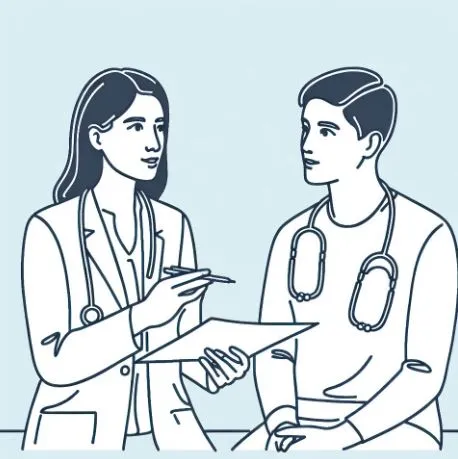
Photo: Copilot, Public domain, via Wikimedia Commons
There is a particular comfort in being told what is wrong and what will fix it. A diagnosis carries the weight of certainty. A prescription offers a clear path forward. For millions of Americans, this sequence — symptom, diagnosis, treatment — feels not only familiar but fundamentally reassuring. Prevention, by contrast, offers no such clarity. It asks people to act against a threat they cannot see, for a reward they may never consciously experience.
This asymmetry is not accidental. It is the product of deeply embedded psychological tendencies, a healthcare infrastructure built around illness rather than wellness, and a cultural narrative in which the physician-as-healer occupies a position of nearly unassailable authority. Understanding why Americans trust the cure more than the prevention is not merely an academic exercise — it is a prerequisite for any serious public health effort to shift behavior at scale.
The Psychology of the Visible Threat
Behavioral science has long documented what researchers call "present bias" — the cognitive tendency to overvalue immediate, tangible outcomes relative to future, abstract ones. When a person develops chest pain, the threat is immediate and visceral. When a cardiologist prescribes a statin, the benefit feels proportionate and concrete. Prevention, however, operates in the realm of the hypothetical. A daily walk, a reduced-sodium diet, or a routine cholesterol screening may prevent a heart attack that would have occurred in fifteen years — but that prevented event is invisible. There is no moment of relief, no discharge from the hospital, no story to tell.
This invisibility is prevention's most significant political and psychological liability. Research published in health behavior journals consistently shows that people are far more motivated by avoiding an immediate loss than by securing a distant gain — a phenomenon known as loss aversion. Reactive medicine speaks directly to this instinct. Prevention, by design, does not.
Adding to this challenge is what psychologists call "optimism bias" — the widespread human tendency to believe that negative health outcomes are more likely to befall others than oneself. Studies conducted across the United States have found that a majority of adults rate their own health as above average, even when objective measures suggest otherwise. This cognitive distortion makes the proposition of preventive action feel less urgent than it is, particularly for younger adults who have not yet experienced a serious health event.
The Architecture of Medical Authority
The cultural standing of the American physician reinforces these psychological dynamics in powerful ways. For much of the twentieth century, the medical profession cultivated — and was granted — an authority that few other institutions have matched. Patients were conditioned to defer, to listen, and to follow instructions. That deference, while appropriate in many clinical contexts, has had an unintended consequence: it has trained Americans to locate health agency in the doctor's office rather than in their own daily choices.
When a cardiologist recommends a bypass procedure, patients rarely question the recommendation. When a primary care physician suggests a lifestyle modification program, the same patient may nod politely and change very little. The disparity is not rooted in logic — it is rooted in the perceived authority of the intervention. Procedures feel serious. Advice feels optional.
This dynamic is compounded by the structure of most clinical encounters. The average primary care visit in the United States lasts approximately eighteen minutes. Within that window, physicians must address acute concerns, review medications, order labs, and document everything for billing purposes. Substantive conversations about preventive lifestyle change — conversations that research shows require extended engagement and follow-up to be effective — are routinely crowded out by the demands of reactive care.
Insurance Incentives and the Economics of Illness
The financial architecture of American healthcare reinforces this cultural bias in ways that are both systemic and largely invisible to patients. The fee-for-service model, which remains dominant across much of the country, compensates providers for procedures performed rather than outcomes achieved. A cardiologist who performs a stent placement generates far greater revenue than a primary care physician who successfully prevents the arterial blockage that would have necessitated one.
While the Affordable Care Act mandated coverage for a range of preventive services without cost-sharing, uptake of these services has remained persistently lower than public health experts consider adequate. Research has shown that cost is only one barrier among many. Even when screenings are free and accessible, the psychological and structural obstacles described above continue to suppress utilization. Americans do not avoid preventive care primarily because they cannot afford it. Many avoid it because they have not yet been persuaded — at a deeply intuitive level — that it matters as much as the treatments they trust.
The insurance industry, for its part, has historically been slow to invest meaningfully in prevention-oriented care coordination, in part because policyholders change plans frequently enough that the long-term savings from prevention often accrue to a different insurer. The incentive to invest in a patient's fifteen-year health trajectory has been structurally weak.
Reclaiming Prevention as Personal Authority
None of this is immutable. Public health researchers and community health practitioners have identified several strategies that meaningfully shift individual and collective orientation toward prevention — not by dismissing the role of medicine, but by repositioning preventive action as an equally legitimate expression of health authority.
First, reframing prevention in terms of immediate, tangible gains has shown measurable results. Rather than emphasizing the cardiovascular event that a patient might avoid in two decades, effective health communicators focus on the energy, cognitive clarity, and reduced medication burden that accompany improved metabolic health now. This approach aligns with present bias rather than fighting it.
Second, community-based health programs that embed preventive action within trusted social networks — faith communities, neighborhood associations, workplace groups — have demonstrated substantially higher engagement than clinic-based education alone. When prevention is normalized within a person's immediate social environment, the activation energy required to adopt it decreases significantly.
Third, restructuring the clinical encounter itself to prioritize prevention requires both policy intervention and provider training. Patient navigators, health coaches, and extended preventive care appointments are not luxuries — they are evidence-based tools that several health systems have adopted with measurable success in reducing downstream utilization of acute care services.
Finally, addressing the authority gap requires elevating patient agency as a medical value. Shared decision-making models, in which patients are active participants in determining their care priorities rather than passive recipients of clinical judgment, have been associated with higher rates of preventive behavior adherence. When patients understand that their own daily choices carry clinical weight, the perceived hierarchy between prevention and treatment begins to flatten.
A Reorientation, Not a Revolution
America does not need to abandon its confidence in medical expertise. That confidence, appropriately placed, has produced extraordinary advances in survival and quality of life. What it does need is a broader understanding of where health is actually made — not only in the hospital or the clinic, but in the kitchen, the neighborhood park, the annual screening appointment, and the daily decision to prioritize long-term wellbeing over short-term convenience.
The prevention paradox is real, but it is not inevitable. It is a product of history, economics, and psychology — all of which are subject to change. The work of shifting it belongs not only to physicians and policymakers, but to the communities, educators, and individuals who recognize that prevention is not the absence of medicine. It is medicine's most powerful and underutilized form.