The Office as a Health Hub: How Corporate Wellness Is Redefining Who Gets to Be Well
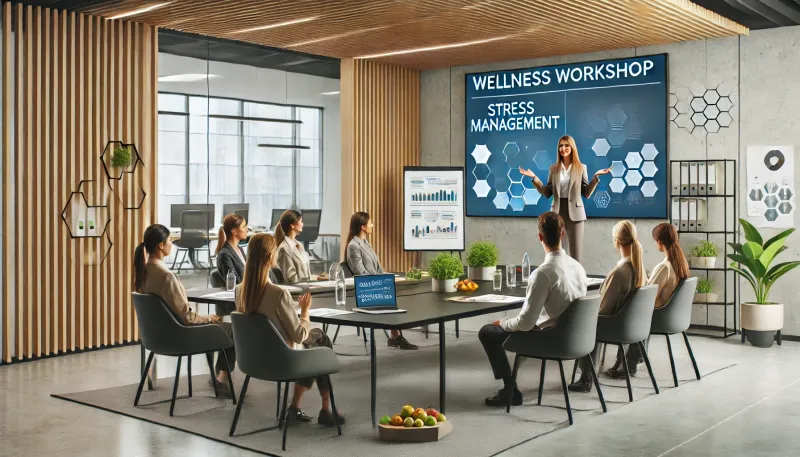
Photo: diverse employees participating in workplace wellness program, via blaenavontic.com
For most of the 20th century, the relationship between an employer and an employee's health was transactional and narrow: a company provided insurance, and a worker used it—or didn't. Prevention was a personal matter, assumed to happen in the space between employment and the doctor's office.
That model is changing, and the pace of that change is accelerating.
Across corporate America, a growing cohort of employers has begun to reconceptualize the workplace as a site of active health promotion. The shift is partly philosophical and partly economic. Chronic disease—heart disease, Type 2 diabetes, obesity-related conditions—costs American employers an estimated $575 billion annually in lost productivity and healthcare expenditure, according to the Integrated Benefits Institute. The business case for keeping workers well has never been clearer. But the implications of this shift extend well beyond the bottom line, touching fundamental questions about who in America gets meaningful access to preventive care.
What Corporate Wellness Actually Looks Like Now
The caricature of workplace wellness—a dusty treadmill in a break room and a poster urging employees to drink more water—no longer reflects what leading programs are delivering. The most sophisticated employer-sponsored initiatives now function as integrated health ecosystems, combining clinical services, behavioral health support, chronic disease management, and data-driven personalization in ways that community health systems are only beginning to replicate.
Johnson & Johnson's long-running wellness program, widely cited in public health literature, has been associated with significant reductions in employee tobacco use, hypertension, and high cholesterol over multiple decades of operation. The company estimates a return of approximately $2.71 for every dollar invested in employee wellness—a figure that, while debated in its specifics, reflects a broader pattern confirmed by peer-reviewed research.
Salesforce has embedded licensed therapists and counselors into its employee assistance infrastructure, offering mental health support with the same administrative ease as scheduling a meeting. Microsoft has expanded its global wellness benefit to include preventive screenings and chronic condition coaching for employees and their dependents. Smaller regional employers, including several manufacturing firms in the Midwest, have deployed on-site health clinics staffed by nurse practitioners who provide primary and preventive care at no out-of-pocket cost to workers.
These programs share a common architecture: they reduce friction. The services come to the employee rather than requiring the employee to navigate an external system. That reduction in logistical burden—the same factor that drives low utilization of community-based preventive services—appears to be a primary driver of engagement.
The Mental Health Inflection Point
If there is a single domain where corporate wellness has undergone the most dramatic evolution in recent years, it is mental health. The COVID-19 pandemic accelerated an already-building recognition that psychological well-being is inseparable from physical health outcomes, and that untreated mental health conditions represent both a human and economic cost that employers can no longer afford to ignore.
The response from a significant segment of corporate America has been substantive. Expanded employee assistance program (EAP) offerings, partnerships with digital mental health platforms such as Lyra Health and Modern Health, and the normalization of mental health days and flexible scheduling have collectively shifted the cultural posture of many workplaces toward psychological safety.
From a prevention standpoint, this matters enormously. Depression and anxiety are among the most significant risk factors for a range of chronic physical conditions, including cardiovascular disease and metabolic disorders. Intervening early—before a mental health challenge compounds into a physical one—is precisely the kind of upstream prevention that the public health field has long advocated for, and that the traditional healthcare system has historically struggled to deliver at scale.
The Equity Problem at the Center of This Model
For all of its genuine promise, the corporate wellness model carries a structural flaw that demands honest examination: it disproportionately benefits workers who are already among the most advantaged in the American labor market.
Full-time employees at large corporations with robust benefits packages are, on average, better educated, higher-earning, and in better baseline health than workers in part-time, gig, or informal employment arrangements. The warehouse worker, the home health aide, the rideshare driver, the agricultural laborer—these are the individuals whose occupational exposures and economic stressors place them at highest risk for the chronic conditions that employer wellness programs are designed to prevent. They are also the individuals least likely to have access to those programs.
The gig economy has expanded dramatically, with an estimated 59 million Americans performing freelance work in 2023 according to Upwork research. These workers are largely excluded from employer-sponsored health benefits of any kind, let alone the sophisticated wellness ecosystems that Fortune 500 companies are building. The result is a two-tiered prevention landscape that mirrors, and in some ways amplifies, the broader inequities of the American health system.
This is not an argument against corporate wellness. It is an argument for expanding its architecture beyond the traditional employment relationship.
What Expansion Could Look Like
Several models are beginning to emerge that suggest pathways for extending the preventive benefits of workplace wellness to populations currently excluded from it.
Multi-employer wellness trusts, used in some unionized industries, pool resources across multiple smaller employers to offer benefits that no single company could sustain alone. This model has particular relevance for small businesses, which employ nearly half of the American private-sector workforce but rarely have the scale to offer meaningful wellness programming.
State and municipal governments are experimenting with wellness benefit mandates and incentive structures that encourage small and mid-sized employers to invest in preventive health offerings. Several cities, including Seattle and Denver, have piloted programs that connect gig workers and part-time employees with subsidized preventive screenings through community health partnerships.
Federally Qualified Health Centers and community health organizations are increasingly pursuing formal partnerships with local employers, offering on-site or near-site preventive services in exchange for employer outreach and scheduling support. These arrangements allow FQHCs to extend their reach while giving employers access to clinical expertise they could not otherwise afford.
Prevention as a Shared Responsibility
The most important insight embedded in the corporate wellness movement may not be about any specific program or intervention. It is the recognition that prevention is most effective when it is embedded in the environments where people live and work—when it is convenient, trusted, and normalized rather than something that requires extraordinary individual effort to access.
The workplace has demonstrated that this model can work. The challenge before communities, policymakers, and public health advocates is to take that lesson seriously and ask how its benefits can be extended to everyone—not only those fortunate enough to hold a desk at the right company.