Checkouts and Checkups: The Health Work Happening Behind the Library Door

Photo: Diliff, CC BY 2.5, via Wikimedia Commons
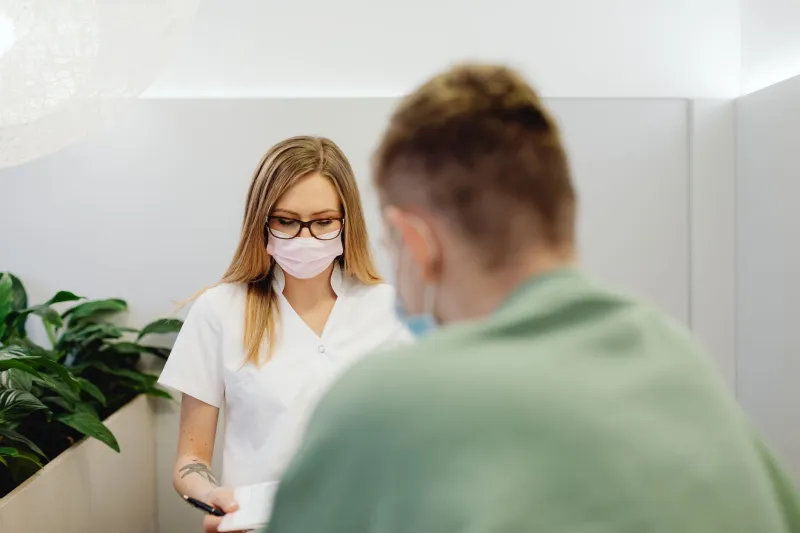
The branch library opens at ten on a weekday morning. By ten-fifteen, a retired teacher is settling into a chair for a blood pressure check administered by a visiting nurse, a father is asking the reference desk where to find a walk-in clinic that accepts his insurance, and a teenager is quietly taking a free naloxone kit from a box near the periodicals.
The scene is not unusual. It plays out in thousands of American public libraries every week, in cities and rural counties alike, largely without press coverage and almost entirely without a dedicated line in any health budget.
A Different Kind of Front Door
Libraries occupy a rare position in American civic life. They are free, they require no appointment or eligibility determination, they are open evenings and weekends, they are climate-controlled, and they are trusted in ways that hospitals and government agencies often are not. For residents who are uninsured, underinsured, or simply unsure how to navigate the health system, the reference desk sometimes functions as a triage point of last resort.
That trust is what makes the library an effective delivery site for prevention services that fail elsewhere. Screening programs built in clinical settings reach people who already have a clinician. Screening programs built in libraries reach people who do not.
What Libraries Are Actually Doing
Three categories of activity have expanded most visibly.
Screening and monitoring. Blood pressure cuffs, scales, and, in some systems, loanable home monitoring kits allow patrons to track a chronic condition between visits. Partnerships with local nursing schools and volunteer physician groups provide the staffing that libraries cannot supply themselves.
Navigation. Trained staff and embedded navigators help patrons enroll in Medicaid or marketplace coverage, find a primary care provider, complete patient assistance applications for expensive prescriptions, and understand a discharge summary they were handed at an emergency department with no explanation.
Harm reduction and crisis response. Naloxone distribution has become common in libraries serving areas with high overdose mortality, frequently paired with brief training. Some systems also stock fentanyl test strips, provide mental health first aid courses, and host peer support groups.
Alongside these sit the programs that feel classically library-like but are quietly preventive: cooking and nutrition classes, walking groups, tax preparation assistance, English-language conversation circles that reduce isolation among older immigrants, and summer meal service for children who rely on school lunch.
Why the Model Works
Three features distinguish the library from other community health venues. The first is stigma. Walking into a library carries no social cost; walking into a substance use program or a free clinic often does. The second is consistency. A library keeps predictable hours in the same building for years, which matters enormously for people whose lives are otherwise unstable. The third is adjacency. Health services sit next to ordinary life — homework, job searches, internet access — so a person can accept help without declaring themselves a patient.
Where the Model Strains
Enthusiasm for the library-as-health-hub should not obscure its limits. Library staff are not clinicians, and the steady accretion of health-related duties has contributed to burnout in a profession already managing complicated social needs. Confronting an overdose in the periodicals room is not what most librarians trained for.
Funding is the deeper problem. Much of this work runs on short grants, one-time philanthropic gifts, and partnerships sustained by a single committed nurse or health department employee. When the grant cycle ends, the blood pressure clinic ends with it. There is no billing mechanism for a library, and few states reimburse community-based organizations for prevention services delivered outside a clinical setting.
Privacy and liability questions also linger. Library records are protected in most states, but health data collected at a screening table raises questions that existing library privacy law does not fully answer. Space, meanwhile, is finite: a branch that hosts a vaccination clinic loses its meeting room for the day.
What Better Support Would Look Like
Health departments and prevention funders have several practical levers.
- Multi-year contracts instead of project grants. Sustained funding lets libraries hire trained staff rather than asking circulation desks to absorb another responsibility.
- Clinical partnership with defined roles. Nurses and pharmacists should deliver clinical services; library staff should coordinate, host, and refer. Clear boundaries protect both.
- Community benefit investment. Nonprofit hospitals subject to federal community benefit obligations could direct a portion toward library-based prevention partnerships, with measurable targets attached.
- Reimbursement pathways. States exploring Medicaid payment for community health workers and community-based prevention should include libraries as eligible host sites.
- Evaluation. Most library health programs are documented anecdotally. Simple, consistent metrics — screenings completed, referrals made and closed, naloxone kits distributed and used — would let funders compare programs and defend them at budget time.
A Branch on the Prevention Map
The American prevention system is often described as a set of clinics, insurers, and agencies. In practice, a meaningful share of it happens in buildings with reading rooms and return bins, staffed by people who never expected to be part of the health workforce.
Recognizing that work — with money, training, and formal partnership rather than applause — would cost far less than building a new clinic, and it would reach people the clinics have never managed to find.